

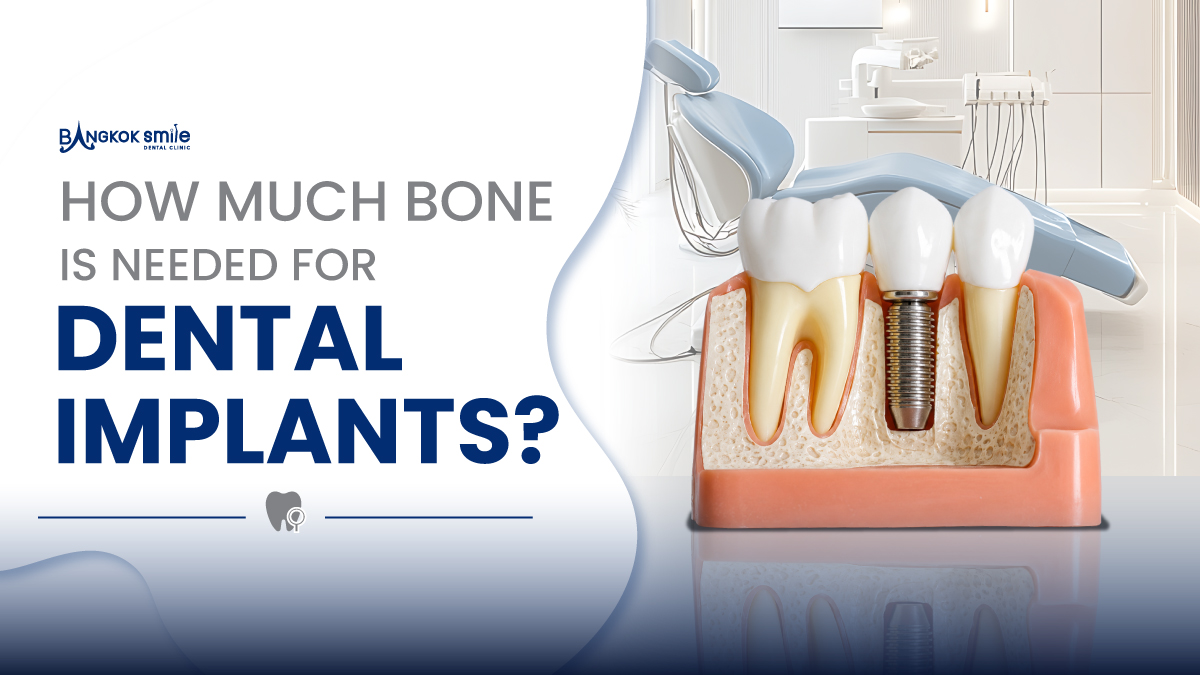
“You don’t have enough bone for an implant.” It’s one of the most common things patients hear,often with little explanation of what it actually means or what, if anything, can be done about it. Dental implants anchor directly into the jawbone, which means having adequate bone isone of the most important factors in whether an implant can be placed successfully and last. Understanding how bone requirements work, how they’re measured, and what bonegrafting accomplishes when there isn’t enough, demystifies one of the more common concernsin implant dentistry.
Bone Height and Bone Width Both Matter
When we talk about adequate bone for an implant, we’re referring to two dimensions: height,how tall the bone is from the top of the ridge downward, and width, how thick the bone is fromthe cheek side to the tongue side. An implant needs sufficient bone in both dimensions to befully surrounded and supported by bone, which is what allows it to integrate stably and bearchewing forces. Insufficient height risks the implant being too close to important structures likenerves or the sinus cavity; insufficient width risks the implant not being fully encased in bone,compromising its stability.
Why Bone Is Often Lacking
Bone loss in the jaw most commonly results from tooth loss itself. When a tooth is removed andnot replaced, the bone that surrounded its root begins to resorb, gradually shrinking in both height and width over months and years, since it no longer receives the stimulation the toothroot provided. This is why patients who have been missing teeth for a long time, or who haveworn dentures that don’t stimulate the bone, often have reduced bone volume by the time theyconsider implants. Gum disease is another common cause, as it destroys bone as it progresses.
How Bone Is Measured
Bone volume is assessed through 3D Cone Beam CT imaging, a scan that captures the jaw inthree dimensions and reveals both height and width at each potential implant site, along with theexact location of nerves and sinus cavities nearby. A standard two-dimensional X-ray simplycan’t deliver this: it flattens the jaw into a single plane and can’t accurately show width at all.Working from a 3D scan instead lets us plan precisely whether an implant can be placed as-is,or, if not, exactly what’s needed first to make it possible.
What Bone Grafting Accomplishes
When there isn’t enough bone, bone grafting can rebuild the volume needed to support an implant. Grafting involves adding bone material, which can come from the patient’s own body, adonor source, or synthetic materials, to the deficient area, where it serves as a scaffold that thebody’s own bone gradually grows into and replaces over a healing period. Over time, this creates new, adequate bone volume where there wasn’t enough before, making implantplacement possible in sites that initially couldn’t support an implant.
Different Types of Grafting for Different Situations
The type of grafting depends on where and how much bone is needed:
- Socket preservation graft. Placed at the time of tooth extraction, this helps maintainbone volume from the start, reducing the resorption that would otherwise occur.
- Ridge augmentation. Rebuilds width or height in a ridge that has already resorbed.
- Sinus lift. Specifically addresses the upper back jaw, where the sinus cavity oftenexpands downward into the space needed for implants, by adding bone beneath thesinus to create adequate height.
The right approach depends on the specific deficiency revealed by the 3D scan.
When Grafting Can Be Done at the Same Time as Implant Placement
In some cases, particularly smaller grafts, the grafting can be done at the same time as implantplacement, with the implant placed into the grafted site in a single procedure. In other cases,particularly larger grafts, the graft needs to heal first over a period of months before the implantcan be placed, making it a two-stage process. Which approach applies depends on the extent ofgrafting needed, which the 3D scan reveals, and we plan this in advance so patients understandwhether their treatment is a single procedure or a staged one.
When There Genuinely Isn’t Enough Bone Even for Grafting
In cases of severe bone loss, standard grafting may not be sufficient, and alternativeapproaches, such as implants designed for reduced bone or, in the upper jaw, implantsanchored in alternative bone, may be considered. These are specialized solutions for advancedcases, and they exist precisely so that severe bone loss rarely means implants are entirelyimpossible. A thorough assessment determines whether standard placement, grafting, or one ofthese alternative approaches is the right path.
How Long Bone Grafting Adds to the Timeline
A practical question for patients facing grafting is how much time it adds to the overall treatment.The answer depends on the type and extent of grafting. Smaller grafts done at the same time asimplant placement add little to no extra time, since they heal alongside the implant’s integration.Larger grafts that must heal before implant placement typically add several months to the timeline, since the grafted bone needs time to mature into stable bone capable of supporting an implant. We map this out clearly during planning, which is particularly important for internationalpatients coordinating treatment with travel, since a case requiring a staged graft may involveeither an extended stay or a return visit rather than a single trip.
Why Earlier Action Preserves More Options
One theme worth emphasizing is that bone loss following tooth loss is progressive, meaning thelonger a gap goes unaddressed, the more bone is typically lost. A patient who addresses a missing tooth with an implant relatively soon after extraction often has adequate bone andavoids grafting entirely, while a patient who waits many years may find that significant resorptionhas occurred, requiring grafting to rebuild what was lost. This doesn’t mean delayed implantsare impossible, since grafting can rebuild the bone, but it does mean that earlier action oftenresults in a simpler, faster, less costly path. For patients considering implants, this is a reasonnot to delay indefinitely, since the bone situation generally doesn’t improve on its own with time.
The Quality of Bone Matters, Not Just the Quantity
Beyond how much bone is present, the density or quality of the bone also matters for implantsuccess, since denser bone provides more stable initial anchorage for an implant. Bone densityvaries by location in the jaw and between individuals, and it’s assessed alongside volume duringthe 3D scan. This matters because it influences both whether an implant can be loaded with arestoration immediately or needs a longer integration period, and the overall approach toplacement. A complete bone assessment therefore considers both quantity and quality together,giving a fuller picture than volume alone.
What This Means If You’ve Been Told You Lack Bone
If you’ve been told you don’t have enough bone for implants, it’s worth understanding that this isfrequently an addressable issue rather than a permanent disqualification. A 3D scan revealsexactly how much bone you have and what, if any, grafting would make implants possible, andin the large majority of cases, a path forward exists. A proper assessment is the reliable wayto understand your specific situation and what would be needed to make implantssuccessful for you,rather than accepting a vague “not enough bone” without knowing whatcould actually be done about it.
Wondering If You Have Enough Bone for Dental Implants?
Being told you “don’t have enough bone” doesn’t necessarily mean dental implants aren’t an option. With modern techniques such as bone grafting, ridge augmentation, and sinus lift procedures, many patients who were once considered unsuitable can still become candidates for implant treatment.
At Bangkok Smile Dental Clinic, our implant dentists use 3D CBCT imaging to accurately assess your bone volume and quality, explain your treatment options, and create a personalized treatment plan based on your specific needs.
Schedule a consultation today to find out whether dental implants are right for you and learn which treatment approach offers the best long-term outcome.